
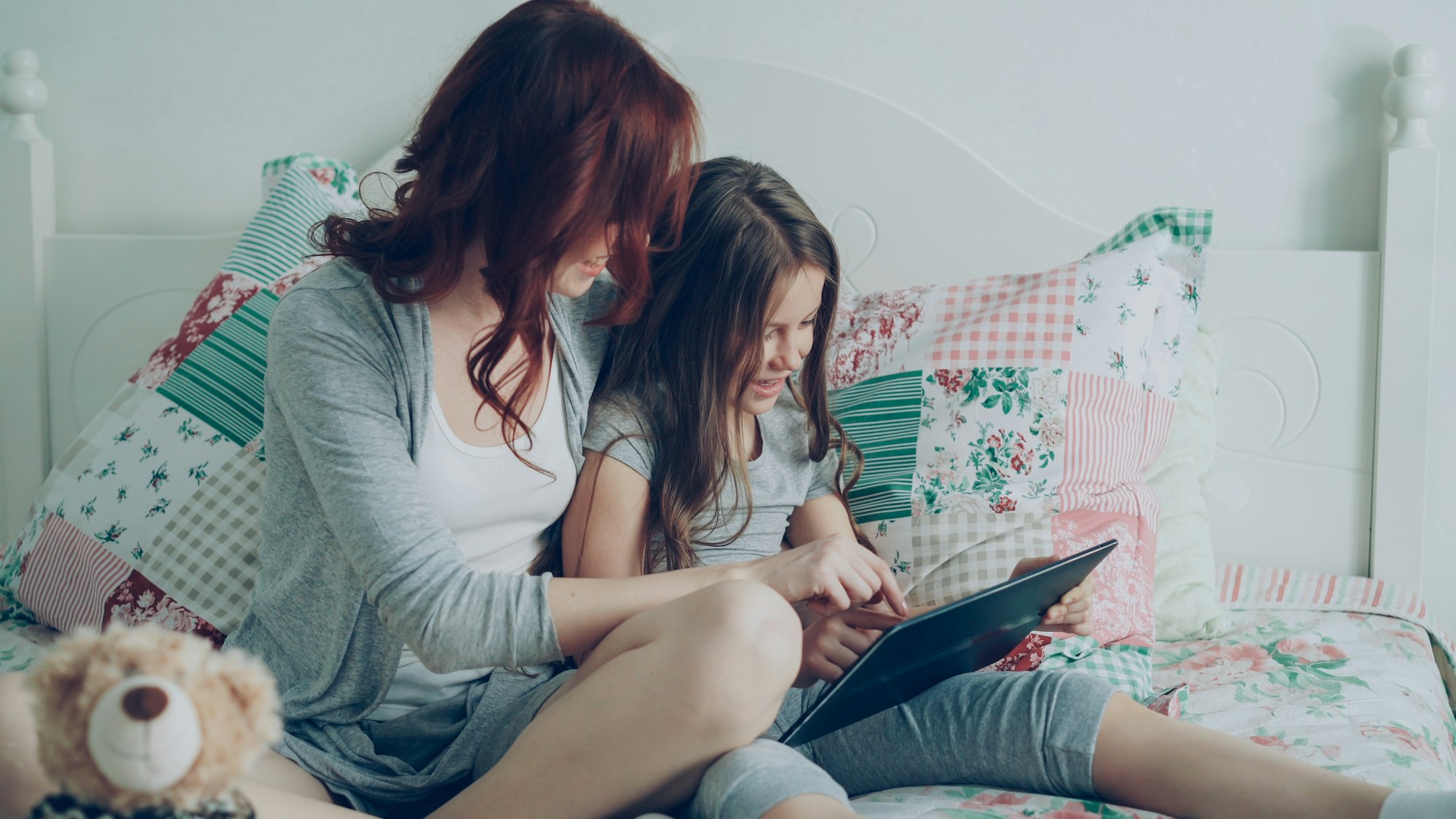
Television, tablets and mobile phones are part of every home. The question is not whether a child will ever see a screen, but how much, which content, and with whom. Major health organizations provide clear limits, especially for the first five years.
What the World Health Organization says
WHO guidelines for children under 5 years old (2019) address the time a child spends in front of a screen:
- Under 1 year: no screen time.
- 1 year old: no screen time.
- 2 years old: up to 1 hour per day, and the less the better.
- 3 to 4 years old: up to 1 hour per day, and the less the better.
For the hours when a child sits quietly, WHO recommends something specific: reading and telling stories together with the person caring for them.
What the American Academy of Pediatrics says
The AAP comes to similar limits. Under 18 months, it considers television and apps a bad idea, with one exception: video calls with grandma or a parent who is away, which help relationships. From 18 months to 5 years, it recommends up to 1 hour per day, and emphasizes the content and having an adult watch together with the child. Children learn more from what they see when they share it with an adult who talks to them about it.
The AAP puts it more simply: a toddler learns far more by banging pots on the floor while you cook than from a screen. Young children need to touch, move and throw things.
Screens and sleep
Screen light can affect sleep. The NHS recommends that children under 5 should not watch laptops, tablets or mobile phones 30 to 60 minutes before sleep, and UK government guidance mentions the last hour. In place of the screen, a bedtime story.
Small rules that work
- Screens are not a tool to calm a child. The AAP advises against using them to stop crying or to put a baby to sleep.
- Screen-free zones. The dinner table and bedtime are the most common.
- We watch together. When there is a screen, the adult sits nearby, asks questions, comments.
- Predictable routine. For young children, consistent time limits help, and a timer makes "the end" easier.
- A family plan. The AAP recommends a plan for the whole family, and for parents, that changes as the child grows.
The nanny and screens
Screen rules are among the first things worth agreeing on with your nanny, because the child needs the same limits with whoever they are with. A good nanny does not turn on the television to win quiet. She knows what to suggest instead: a book, conversation, drawing, a board game, music, a trip to the playground. WHO recommends for children 1 to 4 years old at least 180 minutes of physical activity per day, of any intensity, and this easily fills a day without screens.
Sources
- World Health Organization: To grow up healthy, children need to sit less and play more (2019)
- American Academy of Pediatrics (HealthyChildren.org): Why to Avoid TV for Infants and Toddlers
- American Academy of Pediatrics (HealthyChildren.org): Infants and Screen Time
- American Academy of Pediatrics (HealthyChildren.org): Watch Together
- American Academy of Pediatrics (HealthyChildren.org): Tips for Parents, Digital Age
- American Academy of Pediatrics (HealthyChildren.org): How to Make a Family Media Use Plan
- NHS: Sleep and young children
- UK Government, Best Start in Life: Screen time for under 5s
This article is for information purposes and does not replace advice from your pediatrician.