
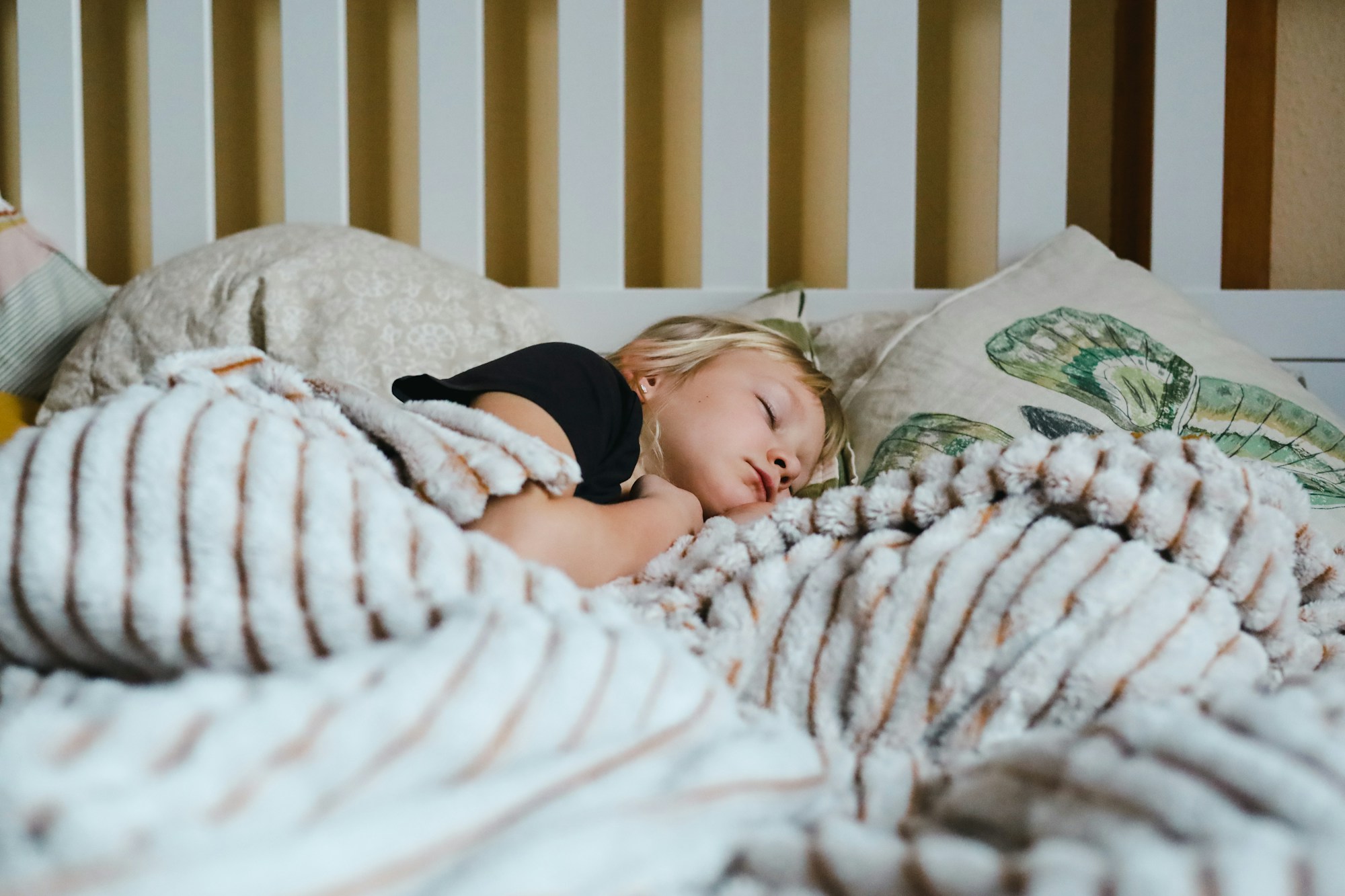
Sleep is one of the first things parents ask about and one of the first things worth discussing with your nanny before she starts. Below you will find what international pediatric guidelines recommend, how a baby sleeps safely, and what makes a good bedtime routine.
Sleep hours by age
The American Academy of Sleep Medicine (AASM) published recommendations in 2016 that were adopted by the American Academy of Pediatrics. The hours refer to total sleep within 24 hours, including daytime naps:
- 4 to 12 months: 12 to 16 hours
- 1 to 2 years: 11 to 14 hours
- 3 to 5 years: 10 to 13 hours
- 6 to 12 years: 9 to 12 hours
For babies under 4 months, AASM does not provide a recommendation because the normal range is very wide. The American CDC table mentions 14 to 17 hours for newborns up to 3 months, while the NHS notes that some newborns sleep a total of around 8 hours a day and others up to 18. If your baby is eating well and growing, these differences are usually normal.
Safe sleep for your baby
The guidelines from the American Academy of Pediatrics (updated 2022) are clear and apply to anyone putting a baby to sleep, at every sleep time, day and night:
- Always on their back, at every sleep time.
- In a crib or bassinet, on a firm, flat surface without incline.
- Without pillows, blankets, stuffed animals, or other soft objects.
- In the same room as parents, preferably for at least the first six months, but never in the same bed.
Why routine matters
In a large study involving over 10,000 mothers from many countries (Mindell and colleagues, journal Sleep, 2015), children who had a bedtime routine every night slept on average more than an hour longer, woke less during the night, and fell asleep earlier. The more consistent the routine, the better the results. This is correlation rather than proof of cause, but it aligns with what pediatricians recommend:
- Same sleep and wake time each day.
- Calm routine before sleep, for example a bath, pajamas, a book, goodnight.
- No vigorous play right before sleep.
- Screens out of the bedroom and off 30 to 60 minutes before lights go out.
The nanny's role
A child sleeps better when their day flows with the same rhythm, whoever cares for them. This is why it's worth sharing with your nanny from the start the sleep times, bedtime routine, and small habits of your child (the favorite book, the lullaby, the light that stays on). The nanny keeps them the same, and at the end of the day she lets you know when and how long the child slept.
Sources
- Paruthi et al., Recommended Amount of Sleep for Pediatric Populations: A Consensus Statement of the American Academy of Sleep Medicine (2016)
- American Academy of Pediatrics (HealthyChildren.org): Healthy Sleep Habits, How Many Hours Does Your Child Need?
- CDC: About Sleep
- NHS: Your baby's sleep patterns
- American Academy of Pediatrics: Updated safe sleep recommendations (2022)
- American Academy of Pediatrics (HealthyChildren.org): A Parent's Guide to Safe Sleep
- AASM: Children sleep better when they have a nightly bedtime routine
- American Academy of Pediatrics (HealthyChildren.org): Sleep and Mental Health
This article is informational in nature and does not replace the advice of your pediatrician.