
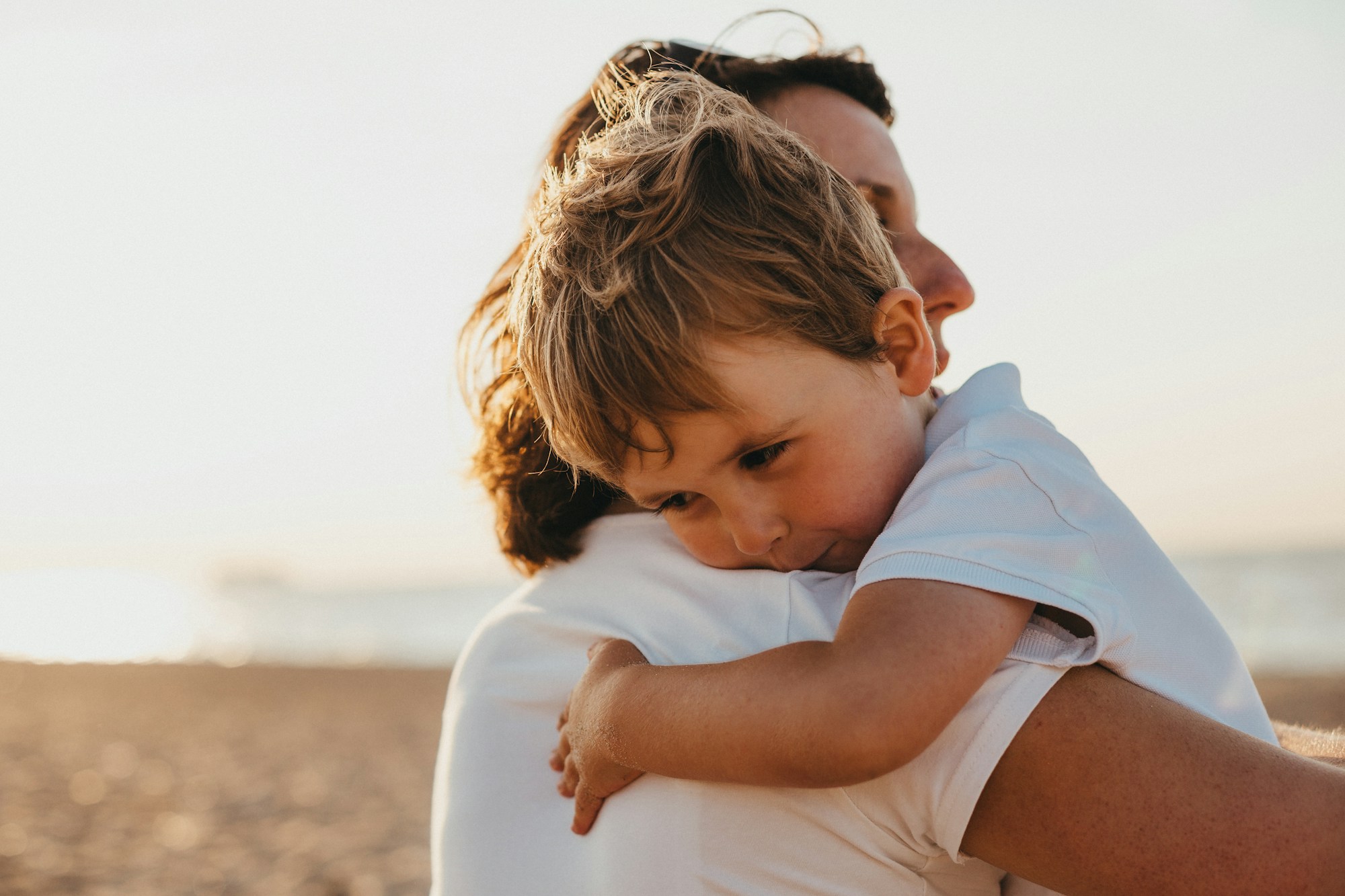
The crying at the door, the little hands that won't let you go, the upset when a new person enters the home. Separation anxiety is difficult for every parent, but it is one of the most natural stages of development. The American Academy of Pediatrics describes it as completely normal behaviour and a beautiful sign of a strong bond.
Why it happens
At some point during the first year, your baby discovers that people and things continue to exist even when they can't see them. But they don't understand time yet: they live in the now. Each time you leave their sight, they don't know you'll be back soon.
When it appears and when it passes
Pediatric sources give a range, not a single age. In some babies it appears as early as 4 to 5 months, more commonly around 7 to 9 months. It usually peaks between 10 and 18 months and subsides in the second half of the second year. The British NHS considers it common from 6 months to 3 years, and rarely persists daily after preschool age.
It is more intense when the child is tired, hungry or unwell. And something reassuring: the tears usually stop a few minutes after you leave.
What helps in practice
- A brief goodbye ritual. A kiss, a hug, a phrase you always say, at the same time each day. A prolonged goodbye draws out the anxiety as well.
- Never sneak away. A child who discovers you've disappeared may worry you'll leave again at any moment. Say goodbye, even if they protest.
- A calm, confident manner. Babies pick up on the tension of adults. A smile and a steady voice say "everything is okay" better than any explanation.
- Don't come back. A "visit" shortly after leaving starts the cycle all over again.
- Tell them when you'll return, in their terms. "After nap time", not "at three o'clock". And return when you said you would.
- A familiar object. The favourite blanket, a toy or a t-shirt of yours with your scent.
- Small separations for practice. Start with a short time, with a familiar person, and gradually increase it. Even peekaboo is practice: it shows your baby that you always come back.
When a new nanny starts
The same rules apply here too. The first hours with you at home, then short periods where the child spends time only with the nanny and these grow day by day, the same goodbye ritual every morning and the favourite object nearby. The U.S. National Library of Medicine specifically states that care from reliable people helps the baby adapt to the parents' absence. A consistent person who comes every day and maintains the same routine makes the transition much easier.
When to talk to your pediatrician
Almost all children experience some separation anxiety. Discuss it with your pediatrician if the upset is much more intense than expected for the age, if it lasts weeks without improvement, if it affects sleep and daily life, or if it remains intense after age 2.
Sources
- American Academy of Pediatrics (HealthyChildren.org): Soothing Your Child's Separation Anxiety
- American Academy of Pediatrics (HealthyChildren.org): Emotional and Social Development, 8 to 12 Months
- NHS: Separation anxiety
- ZERO TO THREE: Separation Anxiety
- MedlinePlus, U.S. National Library of Medicine: Separation anxiety in children
- MSD Manual (Home Edition): Separation Anxiety Disorder
This article is for informational purposes and does not replace the advice of your pediatrician.