
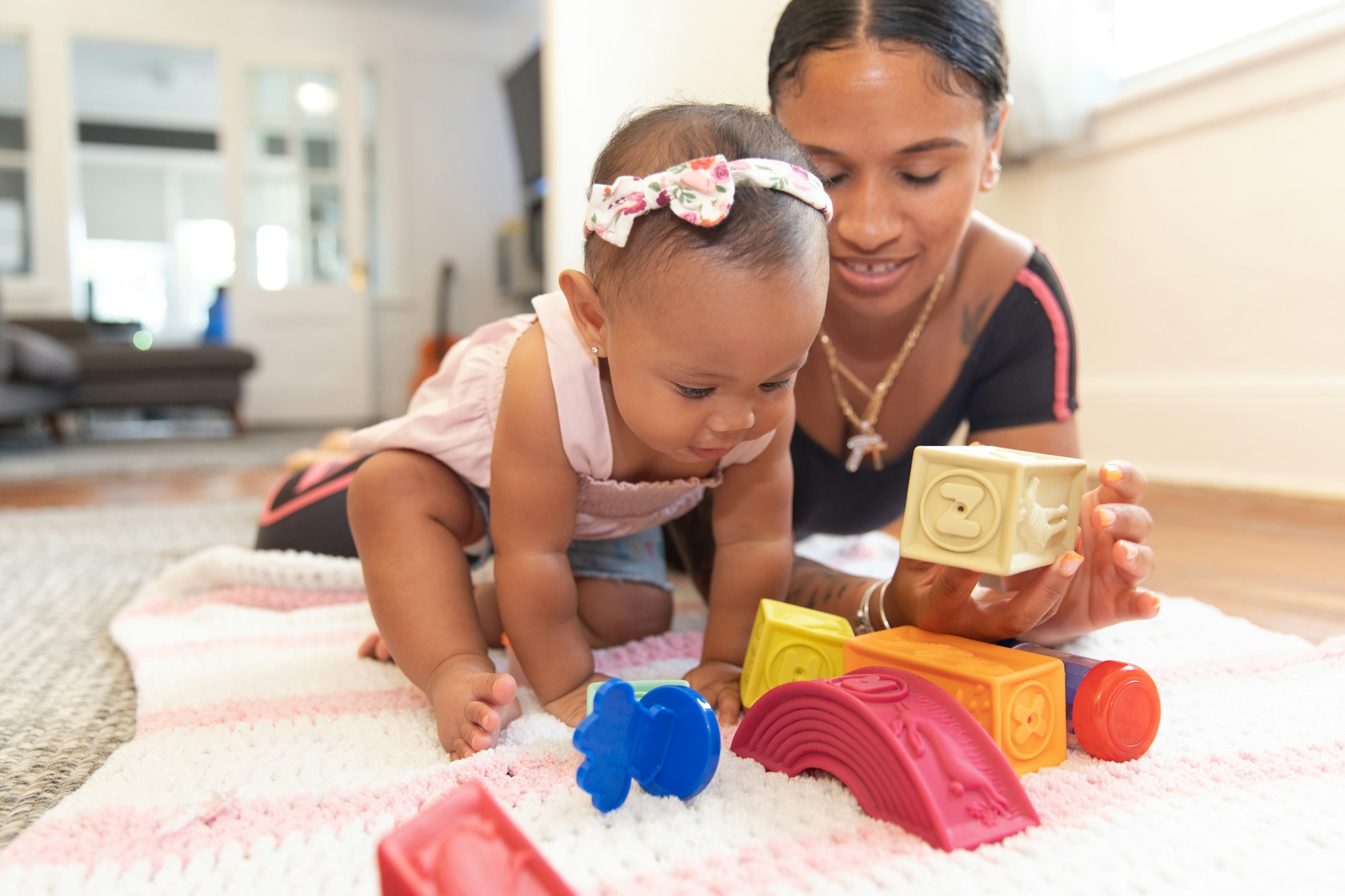
When you are looking for someone to care for your child, the first thing that matters is trust. Immediately after comes a question we often forget to ask: what does this person know about how a child grows up? This is where the value of a trained educator lies.
From caregiver to early childhood pedagogue
In Greece the profession has a long history. At today's University of West Attica its roots go back to 1955, to the School of Infant Care. Later it became the Department of Infant and Child Care and the Department of Preschool Education at the Athens TEI, and today it is the university Department of Education and Care in Early Childhood. As the department itself notes, the profession of Early Childhood Pedagogue represents an evolution of the infant caregiver profession.
Its mission, in the department's words, is the education, care and instruction of the child from birth until entry into compulsory education, with the aim of comprehensive development, learning and wellbeing.
What they study
The curriculum is based on four scientific fields: Pedagogy, Psychology, Sociology, Administration and Economics of Education, and Aesthetic Education and Culture. It also includes 600 hours of practical training, three months in infant and child care and education settings. In other words, an early childhood pedagogue has learned theory and has worked alongside real children before graduating.
The professional rights of Early Childhood Care graduates were established by Presidential Decree 523/1991 and concern the education and care of preschool children, from two months until enrollment in primary school.
Not all qualifications are the same
In this field you will encounter different titles, and it is worth knowing what each one means:
- Early childhood pedagogue or Early Childhood Educator: university degree, for children from birth until school.
- Kindergarten teacher: university degree from departments such as the Department of Education and Care in Preschool Age at NKUA, with an emphasis on kindergarten education.
- Assistant early childhood caregiver: IEK diploma (level 5, versus level 6 for a university degree), for children aged 0 to 6. The study guide specifies that the assistant works in collaboration with the responsible early childhood pedagogue or kindergarten teacher.
No title replaces experience, references and chemistry with the child. But it is reasonable to ask what exactly the person who will stay with your child has studied.
What research shows
The training of caregivers has been studied mainly in childcare centers and home-based care. A meta-analysis of 48 studies (Manning and colleagues, 2019) found that higher qualifications of educators are significantly associated with higher quality care environments. This is a correlation, not proof of cause.
The major American NICHD study on early childhood care reached something similar: more educated and trained caregivers provided a richer learning environment and warmer, more sensitive care, and their children performed better on cognitive and language development tests. The same research shows that training works through the quality of daily care, and that parental care remains the strongest factor. A good educator does not take your place. While you are away, she continues what you are building.
What this means in practice
A trained educator knows what we can expect from a child at each age and what play helps them progress. She transforms the daily routine, feeding, dressing, going out, into opportunities for conversation and learning. She recognizes early on something worth discussing with your pediatrician. And she handles the difficult moments, crying, anger, refusal, with calm and consistency rather than improvisation.
At Kindora, before we recommend a nanny to you, we check her references and her first aid certification. If studies in early childhood education are a priority for you, tell us from the start so we can take it into account in our recommendations.
Sources
- University of West Attica: Department of Education and Care in Early Childhood
- Department Study Guide 2024-25 (history, fields, practical training, Presidential Decree 523/1991)
- NKUA: Department of Education and Care in Preschool Age Study Guide
- DYPA: IEK Study Guide, Assistant Early Childhood Caregiver
- Manning et al. (2019), Is Teacher Qualification Associated With the Quality of the Early Childhood Education and Care Environment? Review of Educational Research
- Clarke-Stewart et al. (2002), Do regulable features of child-care homes affect children's development? Early Childhood Research Quarterly
- NICHD Early Child Care Research Network (2002), Child-Care Structure, Process, Outcome. Psychological Science