
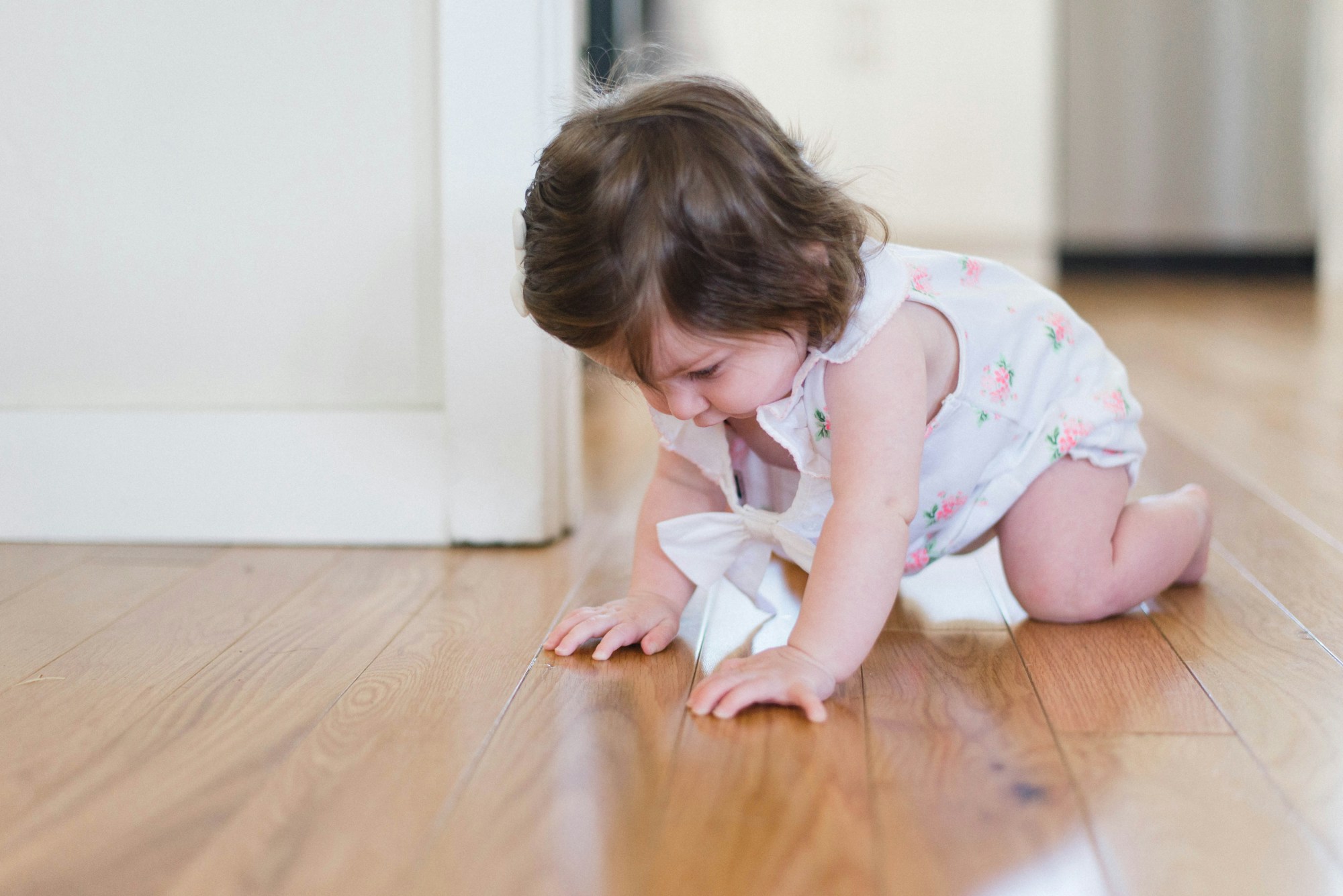
A small child moves fast, explores everything and doesn't yet know what's dangerous. A few specific habits, though, can greatly reduce the risks at home. This is the list that both parents and nannies should read.
In short: the biggest risks for a young child at home are water, medicines and cleaning products, choking on food and small objects, falls and burns. Constant supervision and a few simple changes at home greatly reduce the risk, and knowing first aid helps until professional help arrives (112, 166).
Water: never without supervision
According to the World Health Organization, drowning is the fourth leading cause of death for children aged 1 to 4 worldwide. The American Academy of Pediatrics notes that a young child can drown in just a few centimetres of water, quickly and silently, and that most drownings at home happen in the bathtub, usually in a single moment of inattention.
- In the bath, an adult stays right next to the child the whole time, within arm's reach.
- If the phone rings or someone's at the door, the child comes out of the water with you.
- Empty the bathtub, buckets and any container of water immediately after use.
Medicines and cleaning products
- All medicines locked away or kept high up, out of sight, in their original packaging.
- Child-safety caps make things harder for a child, but they're not impossible to open. They're not enough on their own.
- Be careful with any medicines in your bag, and in visitors' bags too.
- Cleaning products, including toilet cleaners, should be kept high up or in a cabinet with a safety lock.
Food and small objects
The AAP recommends that high choking-risk foods not be given to children under 4, and that young children's food be cut into pieces no larger than about one and a half centimetres. Meals should always be eaten with an adult present.
- Buttons, coins, marbles and small toy parts should be kept out of a baby's reach.
- Balloons are a choking hazard for children up to age 8.
- Button batteries can cause internal burns if swallowed. Extra care is needed with remote controls and small gadgets.
Falls, windows and furniture
- A baby should never be left alone on a bed, sofa or changing table, not even for a second. For sleep, follow the safe sleep rules.
- The NHS recommends stops or safety locks that allow windows to open less than 6.5 centimetres. The AAP recommends, where possible, opening windows from the top.
- Bookcases, chests of drawers and TVs should be secured to the wall. A TV on top of a chest of drawers that tips over can seriously injure a child.
Burns
A hot drink can still cause a burn even 15 minutes after it's made, the NHS notes. Keep hot liquids away from the edge of the table and never hold them while holding the child. If a burn happens, run cool water over the area immediately and seek medical help if needed.
Why first aid matters
Prevention reduces risks, it doesn't eliminate them. In a choking incident or an episode where a child stops breathing, whoever is with the child at that moment needs to know what to do until help arrives. The Hellenic Red Cross runs a six-hour programme where you're trained in CPR and in managing choking in adults, children and infants, with a certificate valid for three years.
That's why at Kindora our nannies hold a first aid certification, and with every placement we offer a free first aid seminar for parents and nannies as a gift.
Phone numbers that should always be close at hand
- 112, the single European emergency number, free of charge
- 166, EKAB (National Emergency Aid Centre)
- 210 7793777, Poison Control Centre, available 24 hours a day, 7 days a week, free of charge
- the child's paediatrician, and both parents' mobile numbers
Write them down on a piece of paper next to the fridge, along with the home address: in an emergency, the nanny will need to give it exactly right. Hand her the list on the first day, together with your child's routine.
Frequently asked questions
Which phone numbers should a nanny know?
112 for any emergency, 166 for EKAB, 210 7793777 for the Poison Control Centre, the child's paediatrician and both parents' mobile numbers, together with the exact home address.
How much water does it take for a young child to drown?
Just a few centimetres. That's why an adult stays next to the child, within arm's reach, for the whole bath.
Are Kindora nannies trained in first aid?
Yes. At Kindora our nannies hold a first aid certification, and every placement comes with a free first aid seminar for parents and nannies.
Sources
- World Health Organization: Drowning, fact sheet
- American Academy of Pediatrics (HealthyChildren.org): Water Safety for Young Children
- NHS: Baby and toddler safety
- American Academy of Pediatrics (HealthyChildren.org): Poison Prevention
- American Academy of Pediatrics (HealthyChildren.org): Home Safety, Here's How
- American Academy of Pediatrics (HealthyChildren.org): Choking Prevention
- American Academy of Pediatrics (HealthyChildren.org): Preventing Furniture and TV Tip-Overs
- American Academy of Pediatrics (HealthyChildren.org): Safety for Your Child, 1 to 2 Years
- Hellenic Red Cross: First Aid
- Ministry of Health: Poison Control Centre
- Decentralised Administration of Attica: Emergency phone numbers
- General Secretariat for Civil Protection: 112
This article is for informational purposes only and does not replace first aid training or medical advice.